


"dmatrix" 并不是一个 C 语言标准库中内置的关键字或数据类型,它通常是一个自定义的、用于表示双精度浮点数矩阵(Double-Precision Matrix)的术语或数据结构名称。
在科学计算、工程、机器学习等领域,经常需要处理大规模的数值数据,而双精度浮点数 (double) 因为其高精度而被广泛使用,开发者会创建自己的 dmatrix 结构体来方便地管理和操作这些数据。
下面我将从几个方面来解释 dmatrix:
- 为什么需要
dmatrix? - 如何定义一个
dmatrix结构体? - 如何实现
dmatrix的基本操作? - 一个完整的
dmatrix示例代码 - 使用现有库的替代方案
为什么需要 dmatrix?
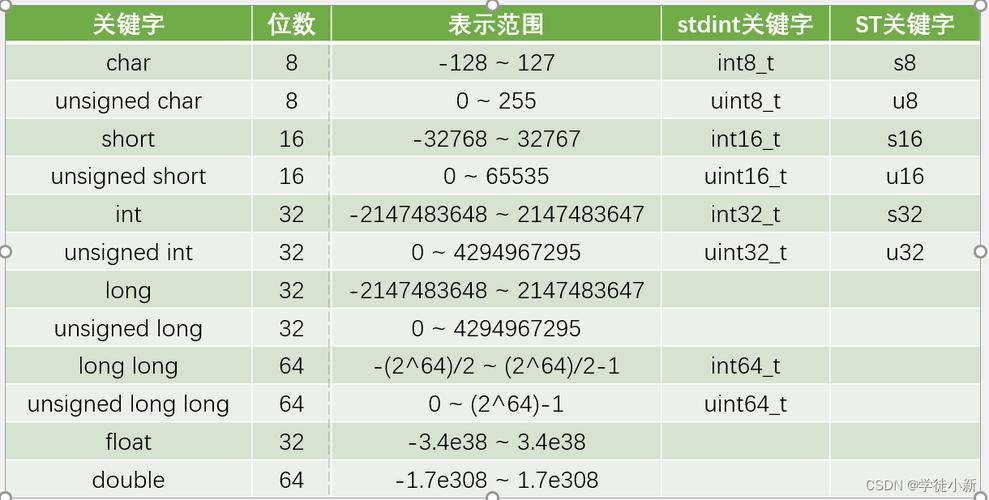
直接使用 C 语言的二维数组 (double matrix[rows][cols]) 来处理矩阵有几个缺点:
- 大小固定:数组的大小必须在编译时确定,无法在运行时动态改变。
- 内存不连续:对于多维数组,内存布局可能不是完全连续的,这不利于高性能计算(如使用 BLAS/LAPACK 库)。
- 管理不便:很难将矩阵作为一个整体进行传递、复制或销毁,你需要手动传递行数和列数,容易出错。
dmatrix 结构体可以很好地解决这些问题,它将矩阵的数据、维度信息和操作方法封装在一起,形成一个更强大、更易用的抽象。
如何定义一个 dmatrix 结构体?
最常见和高效的方式是使用指针指向一块连续分配的内存来存储所有元素,这样既能实现动态大小,又能保证内存的连续性,这对于性能至关重要。
#include <stdio.h>
#include <stdlib.h> // 用于 malloc, free, realloc
// 定义 dmatrix 结构体
typedef struct {
    double* data;  // 指向连续内存块的指针,按行优先存储
    int rows;      // 矩阵的行数
    int cols;      // 矩阵的列数
} dmatrix;
解释:
double* data:这是一个核心,我们只分配一个double类型的指针,指向一块足够大的内存(rows * cols个double),在内存中,元素是连续存储的,data[0]是第0行第0列,data[1]是第0行第1列,...,data[cols]是第1行第0列,以此类推,这种存储方式称为行优先。int rows和int cols:存储矩阵的维度,方便在操作时进行边界检查。
如何实现 dmatrix 的基本操作?
一个完整的 dmatrix 实现通常会包含以下函数:
a. 创建矩阵 (dmatrix_create)
分配内存并初始化行和列。
dmatrix dmatrix_create(int rows, int cols) {
    dmatrix mat;
    mat.rows = rows;
    mat.cols = cols;
    // 分配 rows * cols 个 double 的连续内存
    mat.data = (double*)malloc(rows * cols * sizeof(double));
    if (mat.data == NULL) {
        fprintf(stderr, "Memory allocation failed for dmatrix.\n");
        exit(EXIT_FAILURE);
    }
    return mat;
}
b. 销毁矩阵 (dmatrix_destroy)
释放动态分配的内存,防止内存泄漏。
void dmatrix_destroy(dmatrix* mat) {
    if (mat != NULL && mat->data != NULL) {
        free(mat->data);
        mat->data = NULL; // 防止悬空指针
        mat->rows = 0;
        mat->cols = 0;
    }
}
c. 访问元素
提供安全的访问方法,避免越界。
// 获取元素 (const 版本,用于只读访问)
double dmatrix_get(const dmatrix* mat, int row, int col) {
    if (row < 0 || row >= mat->rows || col < 0 || col >= mat->cols) {
        fprintf(stderr, "Index out of bounds in dmatrix_get.\n");
        exit(EXIT_FAILURE);
    }
    return mat->data[row * mat->cols + col];
}
// 设置元素
void dmatrix_set(dmatrix* mat, int row, int col, double value) {
    if (row < 0 || row >= mat->rows || col < 0 || col >= mat->cols) {
        fprintf(stderr, "Index out of bounds in dmatrix_set.\n");
        exit(EXIT_FAILURE);
    }
    mat->data[row * mat->cols + col] = value;
}
d. 矩阵乘法 (dmatrix_multiply)
这是一个典型的矩阵操作示例。
dmatrix dmatrix_multiply(const dmatrix* a, const dmatrix* b) {
    // 检查是否可以相乘
    if (a->cols != b->rows) {
        fprintf(stderr, "Matrix dimensions do not match for multiplication.\n");
        exit(EXIT_FAILURE);
    }
    dmatrix result = dmatrix_create(a->rows, b->cols);
    for (int i = 0; i < a->rows; i++) {
        for (int j = 0; j < b->cols; j++) {
            double sum = 0.0;
            for (int k = 0; k < a->cols; k++) {
                sum += dmatrix_get(a, i, k) * dmatrix_get(b, k, j);
            }
            dmatrix_set(&result, i, j, sum);
        }
    }
    return result;
}
一个完整的 dmatrix 示例代码
下面是一个将上述所有部分组合起来的完整示例,包括打印矩阵的功能。
#include <stdio.h>
#include <stdlib.h>
// 定义 dmatrix 结构体
typedef struct {
    double* data;
    int rows;
    int cols;
} dmatrix;
// 函数声明
dmatrix dmatrix_create(int rows, int cols);
void dmatrix_destroy(dmatrix* mat);
double dmatrix_get(const dmatrix* mat, int row, int col);
void dmatrix_set(dmatrix* mat, int row, int col, double value);
void dmatrix_print(const dmatrix* mat);
dmatrix dmatrix_multiply(const dmatrix* a, const dmatrix* b);
// --- 函数实现 ---
dmatrix dmatrix_create(int rows, int cols) {
    dmatrix mat;
    mat.rows = rows;
    mat.cols = cols;
    mat.data = (double*)malloc(rows * cols * sizeof(double));
    if (mat.data == NULL) {
        fprintf(stderr, "Memory allocation failed.\n");
        exit(EXIT_FAILURE);
    }
    return mat;
}
void dmatrix_destroy(dmatrix* mat) {
    if (mat != NULL && mat->data != NULL) {
        free(mat->data);
        mat->data = NULL;
        mat->rows = 0;
        mat->cols = 0;
    }
}
double dmatrix_get(const dmatrix* mat, int row, int col) {
    if (row < 0 || row >= mat->rows || col < 0 || col >= mat->cols) {
        fprintf(stderr, "Index out of bounds.\n");
        exit(EXIT_FAILURE);
    }
    return mat->data[row * mat->cols + col];
}
void dmatrix_set(dmatrix* mat, int row, int col, double value) {
    if (row < 0 || row >= mat->rows || col < 0 || col >= mat->cols) {
        fprintf(stderr, "Index out of bounds.\n");
        exit(EXIT_FAILURE);
    }
    mat->data[row * mat->cols + col] = value;
}
void dmatrix_print(const dmatrix* mat) {
    for (int i = 0; i < mat->rows; i++) {
        for (int j = 0; j < mat->cols; j++) {
            printf("%8.2f ", dmatrix_get(mat, i, j));
        }
        printf("\n");
    }
}
dmatrix dmatrix_multiply(const dmatrix* a, const dmatrix* b) {
    if (a->cols != b->rows) {
        fprintf(stderr, "Matrix dimensions do not match for multiplication.\n");
        exit(EXIT_FAILURE);
    }
    dmatrix result = dmatrix_create(a->rows, b->cols);
    for (int i = 0; i < a->rows; i++) {
        for (int j = 0; j < b->cols; j++) {
            double sum = 0.0;
            for (int k = 0; k < a->cols; k++) {
                sum += dmatrix_get(a, i, k) * dmatrix_get(b, k, j);
            }
            dmatrix_set(&result, i, j, sum);
        }
    }
    return result;
}
// --- 主函数 ---
int main() {
    // 创建两个 3x3 的矩阵
    dmatrix mat_a = dmatrix_create(3, 3);
    dmatrix mat_b = dmatrix_create(3, 3);
    // 初始化 mat_a 为单位矩阵
    for (int i = 0; i < mat_a.rows; i++) {
        for (int j = 0; j < mat_a.cols; j++) {
            if (i == j) {
                dmatrix_set(&mat_a, i, j, 1.0);
            } else {
                dmatrix_set(&mat_a, i, j, 0.0);
            }
        }
    }
    // 初始化 mat_b 为一个简单的矩阵
    int val = 1;
    for (int i = 0; i < mat_b.rows; i++) {
        for (int j = 0; j < mat_b.cols; j++) {
            dmatrix_set(&mat_b, i, j, val++);
        }
    }
    printf("Matrix A (Identity):\n");
    dmatrix_print(&mat_a);
    printf("\nMatrix B:\n");
    dmatrix_print(&mat_b);
    // 计算矩阵乘法 C = A * B
    dmatrix mat_c = dmatrix_multiply(&mat_a, &mat_b);
    printf("\nResult C = A * B:\n");
    dmatrix_print(&mat_c);
    // 销毁所有矩阵,释放内存
    dmatrix_destroy(&mat_a);
    dmatrix_destroy(&mat_b);
    dmatrix_destroy(&mat_c);
    return 0;
}
编译和运行:
gcc dmatrix_example.c -o dmatrix_example
./dmatrix_example
预期输出:
Matrix A (Identity):
    1.00     0.00     0.00
    0.00     1.00     0.00
    0.00     0.00     1.00
Matrix B:
    1.00     2.00     3.00
    4.00     5.00     6.00
    7.00     8.00     9.00
Result C = A * B:
    1.00     2.00     3.00
    4.00     5.00     6.00
    7.00     8.00     9.00
使用现有库的替代方案
虽然自己实现 dmatrix 是很好的学习练习,但在实际项目中,直接使用成熟的数值计算库通常是更好的选择,这些库经过了高度优化,性能远超手写代码。
-
GNU Scientific Library (GSL):
-
提供了完整的矩阵和向量类型 (
gsl_matrix,gsl_vector)。 -
包含了数百种经过优化的数学函数,包括线性代数、积分、微分方程等。
-
优点:功能强大、文档齐全、性能好。
-
示例:
#include <gsl/gsl_matrix.h>
#include <gsl/gsl_blas.h>
gsl_matrix *A = gsl_matrix_alloc(3, 3);
gsl_matrix *B = gsl_matrix_alloc(3, 3);
gsl_matrix *C = gsl_matrix_alloc(3, 3);
// ... 填充 A 和 B ...
// C = A * B (使用 BLAS 高性能库)
gsl_blas_dgemm(CblasNoTrans, CblasNoTrans, 1.0, A, B, 0.0, C);
gsl_matrix_free(A);
gsl_matrix_free(B);
gsl_matrix_free(C);
-
-
BLAS/LAPACK:
- 这是业界标准的线性代数库,许多高级语言(如 Python 的 NumPy)的底层就是调用 BLAS/LAPACK。
- 你通常不会直接调用它们,而是通过像 GSL 或 Intel MKL (Math Kernel Library) 这样的封装库来使用。
-
C++ 库 (如果项目允许):
- Eigen: 一个非常流行的 C++ 模板库,语法简洁,性能极高,无需链接。
- Armadillo: 语法类似 MATLAB,非常易用,底层也依赖 BLAS/LAPACK。
| 方案 | 优点 | 缺点 | 适用场景 |
|---|---|---|---|
自定义 dmatrix |
完全控制代码。 学习 C 语言内存管理的好方法。 无需外部依赖。 |
实现复杂,容易出错。 性能通常不如优化库。 功能有限。 |
学习、小型项目、特定需求的简单应用。 |
| GSL 等库 | 功能强大,覆盖面广。 经过高度优化,性能好。 稳定可靠,有文档支持。 |
需要外部依赖。 API 可能比自定义的更复杂。 |
大多数科学计算、工程、数据分析项目。 |
| BLAS/LAPACK | 性能之王,是业界的黄金标准。 | API 非常底层,难以直接使用。 必须通过封装库(如 GSL, MKL)调用。 |
对性能要求极高的计算密集型应用。 |
对于初学者或特定的小型项目,自己实现一个 dmatrix 是一个极佳的练习,但对于任何严肃的科学计算工作,强烈建议使用像 GSL 这样的成熟库。